


RD-Atlas
Logistics on Earth
RD-Atlas: The tactical logistics mule
The RD-Atlas (Autonomous Tactical Logistics And Support) is a modular ground platform derived from the RX-Cargo lunar architecture, but adapted to the extreme constraints of the battlefield, particularly autonomy and operation in an electronic warfare environment. It is non-lethal.
1. The platform at the service of mankind
The primary function of the RD-ATLAS is the autonomous transport of 50 kg of payload over any type of terrain to follow a group of soldiers. It also serves as a mobile power source (tactical power bank) capable of delivering 3 kW peak power to recharge the section's equipment. The system is designed to operate in conditions of total interference (GNSS Denied), supplemented by shape recognition (Skeleton tracking) for soldier tracking mode.
2. Fleet scalability
Some missions require more advanced logistics. This is where the Twin-Mule system comes in. To evacuate an injured person (> 80 kg), two RD-ATLAS units work in synchronized cooperation. The control architecture is of the Leader-Follower type, and to ensure safety in the event of intense radio interference, a backup umbilical cable is provided to ensure synchronization between the two robots.
3. European sovereignty
Sovereignty is a key strategic advantage for RoverXplorer in the defense market. We are specifically targeting the sovereign tactical segment in Europe. It is an alternative to competitors owned by non-European capital. The advantage of sovereignty is guaranteed by a 100% European value and decision-making chain, making it a decisive criterion for European Union armies seeking to secure their equipment and strategic autonomy.
The RD-Atlas represents a leap forward in tactical ground logistics by adapting space engineering (energy autonomy and navigation without GNSS) to the imperatives of modern conflict.
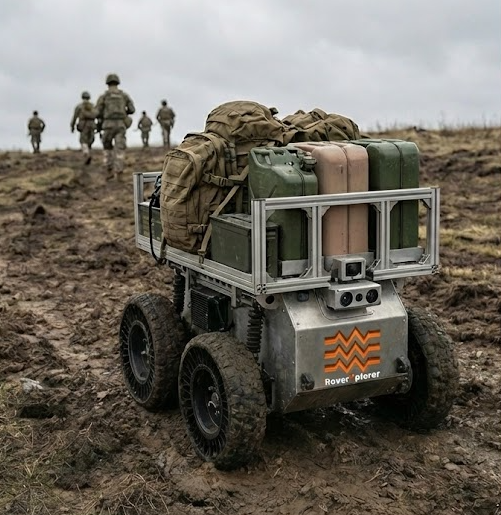
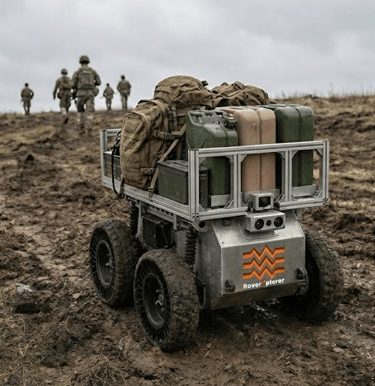
Artistic view of the RD-Atlas rover